
Men’s Fragrance Guide: How to Choose a Signature Scent
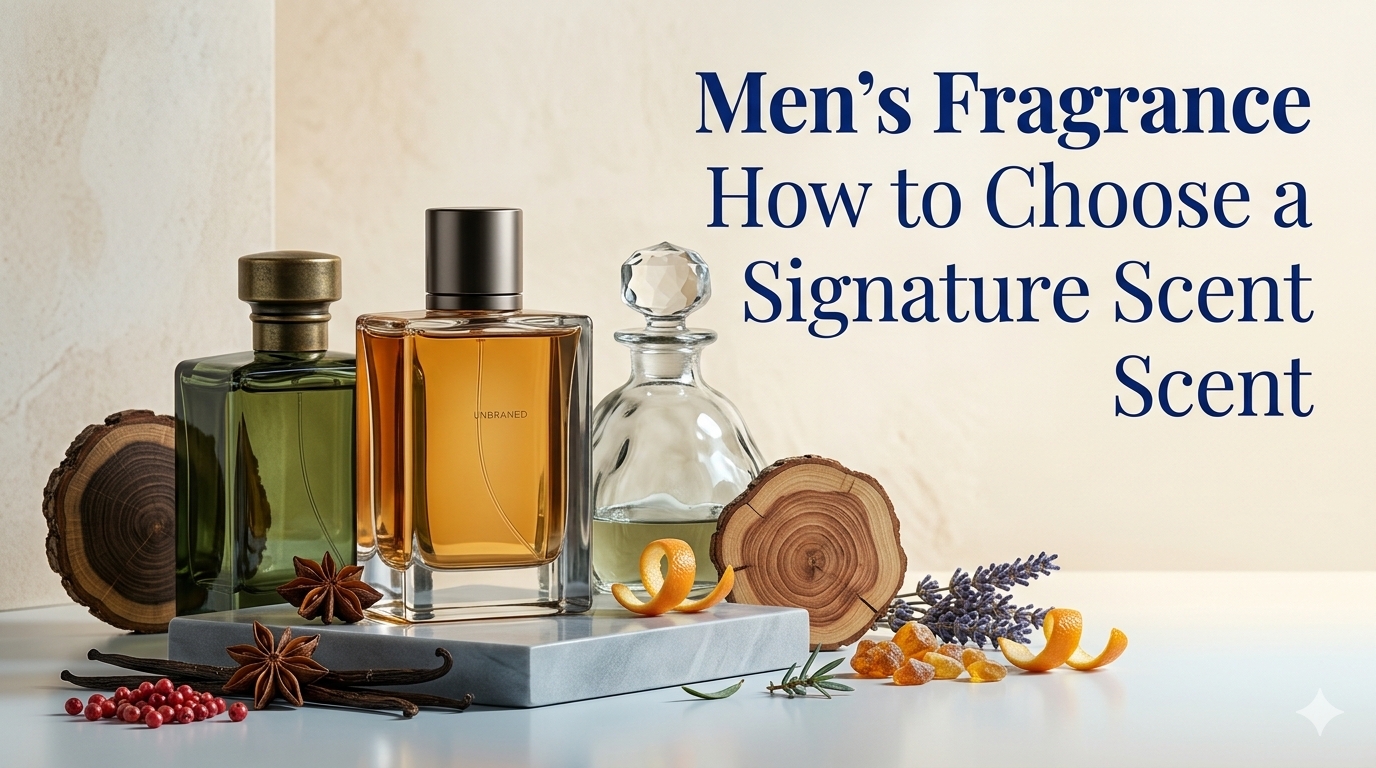
Choosing a signature scent is more than simply finding a fragrance that smells good. The right perfume can become part of your personal identity, influence how people remember you, and complement your style without saying a word. With hundreds of fragrances available in different scent families, concentrations, and price ranges, finding the perfect one can feel overwhelming.
A good men’s fragrance guide should help you understand what makes a fragrance work for you rather than simply telling you which perfume to buy. Your personality, lifestyle, environment, season, and even the occasion can all influence whether a particular scent feels right.
This guide explains how to choose a signature scent, understand fragrance notes, test perfumes correctly, and build a fragrance collection that works for different situations.
What Is a Signature Scent?
A signature scent is a fragrance that becomes closely associated with you. It is usually the perfume you wear regularly and feel comfortable using for everyday activities, social occasions, or professional settings.
A signature scent does not necessarily have to be expensive or exclusive. What matters most is that it fits your personality and makes you feel confident.
For example, someone who prefers a clean and understated style might enjoy fresh citrus or aquatic fragrances, while someone with a bold personality may prefer woody, spicy, or amber-based scents.
Your signature fragrance should feel natural rather than forced. When you wear it consistently, people may eventually associate that particular aroma with you.
Understand Fragrance Notes
Before choosing a perfume, it helps to understand how fragrances are constructed. Most perfumes develop through three main stages: top notes, middle notes, and base notes.
Top Notes
Top notes are the scents you notice immediately after applying a fragrance. They create the first impression but usually disappear relatively quickly.
Common top notes include:
- Lemon
- Bergamot
- Orange
- Grapefruit
- Mint
- Lavender
Fresh and citrusy top notes are particularly popular in men’s fragrances because they create a clean and energetic opening.
Middle Notes
Middle notes, also called heart notes, become noticeable as the top notes fade. They form much of the fragrance’s main character.
Common heart notes include:
- Rose
- Jasmine
- Geranium
- Cinnamon
- Cardamom
- Clary sage
A fragrance may begin with a bright citrus opening and gradually develop into something warmer and more aromatic as the heart notes appear.
Base Notes
Base notes provide depth and longevity. They become more noticeable after the fragrance has been on your skin for several hours.
Popular base notes include:
- Sandalwood
- Cedarwood
- Vetiver
- Amber
- Musk
- Vanilla
- Patchouli
- Oud
When choosing a signature scent, pay close attention to the dry-down—the scent that remains after several hours. A perfume that smells excellent during the first few minutes may develop differently later.
Learn the Main Fragrance Families
Understanding fragrance families can make perfume shopping much easier. Instead of testing dozens of random bottles, you can focus on scent categories that match your preferences.
Fresh Fragrances
Fresh fragrances often contain citrus, aquatic, green, or aromatic notes. They generally feel clean, bright, and refreshing.
They are suitable for:
- Daily wear
- Office environments
- Hot weather
- Casual outings
- Gym or outdoor activities
Fresh fragrances are often a good starting point for someone buying their first everyday perfume.
Woody Fragrances
Woody fragrances commonly feature cedar, sandalwood, vetiver, or other earthy notes. They can feel sophisticated, masculine, and refined.
Woody scents are versatile and can work particularly well for professional settings, evenings, and cooler weather.
Spicy Fragrances
Spicy perfumes may contain notes such as cinnamon, pepper, cardamom, nutmeg, or clove. They tend to create a warmer and more noticeable impression.
These fragrances can be especially suitable for evenings, formal events, and cooler seasons.
Oriental or Amber Fragrances
Warm amber, vanilla, resin, spices, and rich woods are often found in this fragrance style. They can feel luxurious, deep, and sensual.
Because these scents can be powerful, they are often better suited to evenings or colder weather.
Aromatic Fragrances
Aromatic fragrances often feature herbs such as lavender, sage, rosemary, or mint. They can provide a clean and sophisticated character.
They are particularly useful for men looking for something versatile enough for work and everyday wear.
Consider Your Personality
Your fragrance should complement your personality rather than completely define it.
If you are naturally quiet and prefer minimal styles, a clean, subtle fragrance may feel more comfortable. If you enjoy attention and have a confident, expressive personality, a richer or more distinctive scent may suit you better.
Consider the impression you want your fragrance to create.
Do you want to smell:
- Fresh and energetic?
- Professional and polished?
- Warm and inviting?
- Mysterious and sophisticated?
- Bold and confident?
- Relaxed and casual?
There is no universally correct answer. The best fragrance is one that matches the image you want to present.
Think About Your Lifestyle
Your daily routine should play a major role in choosing a signature scent.
A fragrance that works beautifully for a formal dinner may not be practical for an office or outdoor activity. Similarly, a very light summer fragrance may not provide the depth you want during a winter evening.
Think about where you spend most of your time.
If you work in an office, consider clean, moderate fragrances that are unlikely to overwhelm people nearby. If you spend considerable time outdoors, fresh and energetic scents may be more practical.
For someone who frequently attends social events, a more distinctive evening fragrance can add variety to their collection.
Choose According to the Season
Temperature can significantly affect how a fragrance performs.
Spring and Summer
Warm weather generally works well with fresh, citrusy, aquatic, and green fragrances. These scents can feel lighter and more refreshing.
Look for ingredients such as:
- Bergamot
- Lemon
- Grapefruit
- Mint
- Marine notes
- Green accords
Autumn and Winter
Cooler temperatures can complement richer fragrances. Woody, spicy, amber, vanilla, leather, and oud-based scents can provide warmth and depth.
However, personal preference remains important. You do not have to follow seasonal rules strictly.
Eau de Toilette vs. Eau de Parfum
Fragrance concentration is another factor to understand when selecting a perfume.
Eau de Toilette (EDT) generally has a lighter concentration and can feel airy and refreshing. It can be a practical option for daytime use and warmer weather.
Eau de Parfum (EDP) generally contains a higher concentration of fragrance oils and often provides a richer experience with longer-lasting performance.
However, concentration alone does not determine exactly how long a fragrance will last. Ingredients, skin chemistry, application, climate, and formulation all influence performance.
Rather than choosing solely based on the label, test the actual fragrance on your skin.
Always Test Fragrance on Your Skin
One of the biggest mistakes when buying perfume is relying only on a paper tester.
Fragrance can smell different on your skin because your skin chemistry interacts with the ingredients. A perfume that smells excellent on someone else may smell completely different on you.
When testing a fragrance, spray a small amount onto your wrist or forearm.
Avoid rubbing your wrists together. Rubbing can interfere with how the fragrance develops.
Give it time.
Instead of deciding immediately, smell it after approximately 15 minutes, then again after an hour or two. The later stages can tell you much more about whether the fragrance actually suits you.
Don’t Test Too Many Fragrances at Once
Your sense of smell can become overwhelmed when you test too many perfumes in a short period.
If you are shopping for a new fragrance, narrow your choices to a few options. Smelling a large number of perfumes one after another can make them difficult to distinguish.
Some people use coffee beans between fragrances, but taking breaks and getting fresh air can also help reset your sense of smell.
The goal is not to find the most impressive fragrance immediately. It is to discover the one you genuinely enjoy wearing.
Consider Fragrance Performance
Performance generally refers to how long a fragrance lasts and how strongly it projects.
Longevity
Longevity is how long you can detect the fragrance after application.
Some fragrances may last several hours, while others can remain noticeable much longer.
Projection
Projection refers to how far the fragrance radiates from your body.
A fragrance with strong projection may be noticeable to people around you, while a softer fragrance may stay closer to your skin.
Sillage
Sillage describes the scent trail left behind as you move.
Strong performance is not always better. In an office or enclosed space, excessive projection can be uncomfortable for others.
The ideal performance depends on the situation.
Think About Your Budget
A higher price does not automatically mean a fragrance will suit you better.
There are excellent options across different price ranges. Instead of focusing entirely on brand prestige, consider the fragrance’s scent profile, quality, performance, and how frequently you expect to wear it.
If you are uncertain about a fragrance, buying a sample or smaller bottle can be a smart way to test it before investing in a full-size bottle.
This is particularly useful with expensive fragrances that you have never worn before.
Avoid Buying Based Only on Trends
Popular fragrances can be useful starting points, but trends should not determine your signature scent.
A fragrance may be popular because it works well for many people, but that does not mean it will fit your skin, personality, or lifestyle.
Instead of asking, “What fragrance is everyone wearing?” ask yourself, “What fragrance do I genuinely enjoy smelling on myself?”
Your signature scent should feel personal.
Build a Small Fragrance Collection
You do not need dozens of perfumes. A small, carefully selected collection can cover most situations.
A practical collection might include:
Everyday fragrance: A fresh or versatile scent for regular use.
Professional fragrance: Something clean and understated for work or meetings.
Evening fragrance: A warmer, richer scent for dinners and social events.
Special-occasion fragrance: A distinctive option for weddings, celebrations, or formal occasions.
Once you understand your preferences, you can expand your collection naturally.
How to Make Your Fragrance Last Longer
Proper application can help improve fragrance performance.
Apply perfume to areas where the skin is naturally warm, such as the wrists, neck, or behind the ears. Applying fragrance to moisturized skin can also help it remain noticeable for longer.
Avoid excessive spraying. More fragrance does not necessarily mean better results.
You can also spray lightly onto clothing when appropriate, but check the fragrance and fabric first because some formulations may leave marks.
Store your fragrance away from direct sunlight, extreme heat, and humidity. A cool, dry location can help protect the fragrance over time.
Common Mistakes Men Make When Choosing Fragrance
Several mistakes can make fragrance shopping unnecessarily difficult.
One common mistake is choosing a perfume solely because someone else likes it. Another is buying immediately after smelling the opening without experiencing the dry-down.
Over-applying is another frequent problem. A fragrance should complement your presence, not dominate the room.
It is also easy to buy multiple similar fragrances without realizing that they serve the same purpose. Understanding your existing collection can help you choose something that adds variety.
Final Thoughts
Choosing a signature scent is a personal process. There is no single fragrance that works for every man, every occasion, or every environment.
Start by understanding fragrance families and notes. Think about your personality, lifestyle, climate, and the situations in which you expect to wear the fragrance. Test perfumes directly on your skin and give them enough time to develop before making a decision.
Most importantly, choose something you genuinely enjoy. Your fragrance should make you feel comfortable and confident rather than simply following a trend.
A well-chosen signature scent can become a subtle but memorable part of your personal style—something people recognize as uniquely yours.
Get More Ideas: Fade Haircuts for Men

David Walker
David Walker is a seasoned writer with extensive experience covering a wide range of topics across various industries. From insightful tech reviews to lifestyle tips, motivational pieces, and food diaries, David brings an informed perspective to everything he writes. His passion for storytelling and deep understanding of global trends make him a versatile contributor to any discussion. Whether it’s business, technology, freelancing, or events, David delivers valuable content that resonates with diverse audiences.